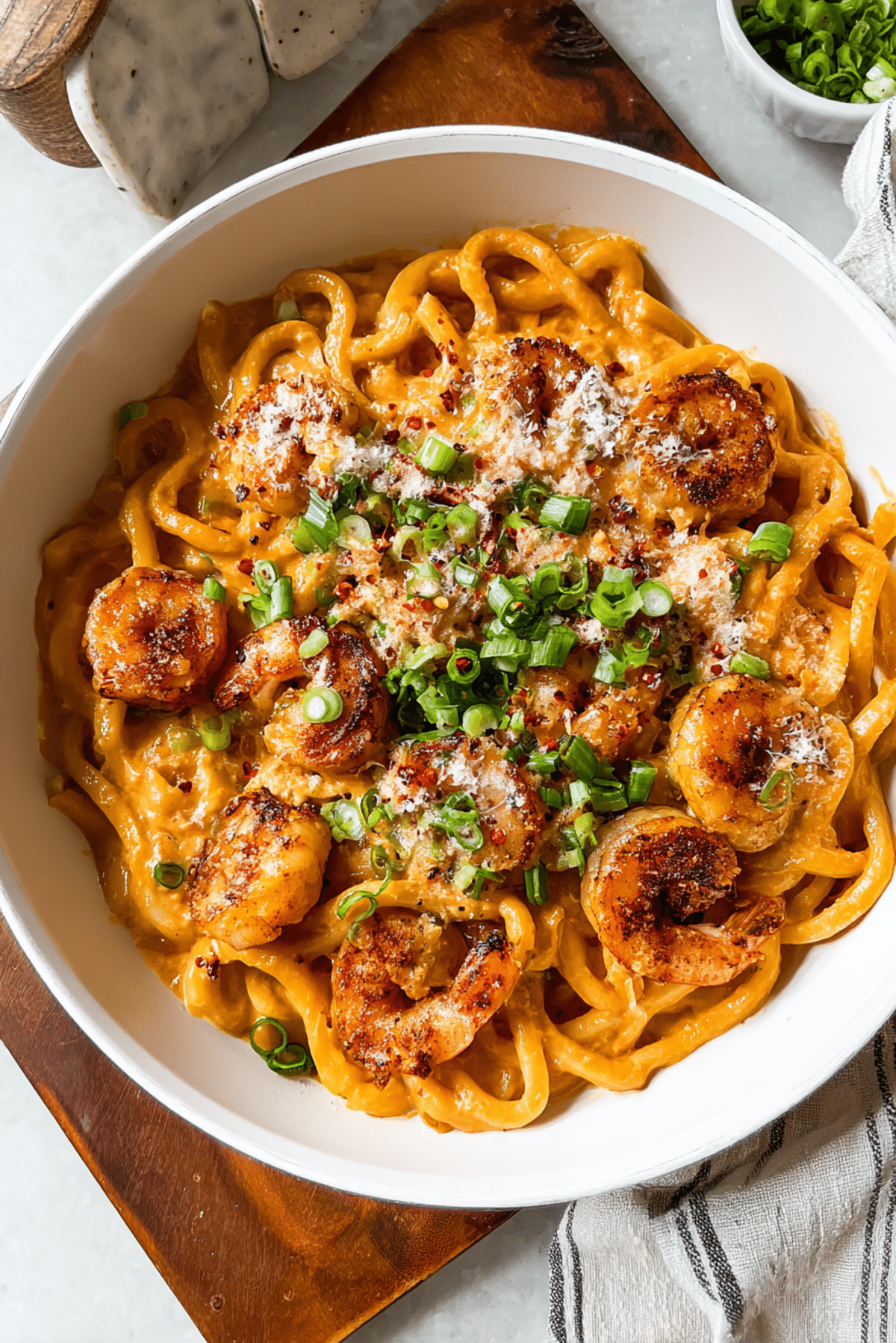
Spicy Gochujang Carbonara Udon with Shrimp
There is something wildly comforting about a bowl of chewy noodles wrapped in a silky sauce, especially when that sauce brings a little heat, a little creaminess, and just enough savory depth to make you stop mid-bite. This dish does exactly that. The shrimp turn sweet and lightly crisp around the edges, the udon stays bouncy and satisfying, and the gochujang folds into the carbonara-style base in a way that feels bold, cozy, and honestly a little addictive. Trust me, you’re going to love this.
Why This Cozy Bowl Feels So Special
Some dinners are practical, and then some feel like a reward at the end of the day. This one lands right in that sweet spot. You get the velvety richness you want from a carbonara-inspired sauce, but then the gochujang sweeps in with a deep, savory heat that keeps every bite lively. The shrimp make it feel a little fancy without making the process harder, and the udon gives the whole thing that glorious chewy pull that regular pasta just cannot quite match.
It is the kind of dinner that looks restaurant-worthy in the pan, but comes together with weeknight energy. And now that we have set the mood, let’s slip into the story behind this flavor-packed mash-up.
From Roman Comfort to Korean Heat
At its heart, this dish borrows a little inspiration from Italian carbonara, that famously luscious combination of eggs, cheese, and pasta water that turns into a glossy sauce when handled gently. Then it takes a turn into Korean flavor with gochujang, the fermented chile paste that brings sweetness, funk, and a slow-building warmth.
That mix might sound unexpected at first, but it works beautifully. Carbonara already thrives on contrast, rich and peppery, creamy and salty. Gochujang adds another layer, something earthy and spicy that makes the whole bowl taste deeper and more modern. Udon fits right into that story because its thick, springy texture holds onto every bit of sauce. Let me tell you, it’s worth every bite.
Reasons This Recipe Earns a Spot in Your Dinner Rotation
Before we get to the skillet, it helps to know why this recipe is one you will want to come back to again and again.
Versatile: You can serve it as a quick family dinner, a date-night meal, or even a fun weekend lunch when you want something comforting with personality.
Budget-Friendly: Udon, eggs, parmesan, and a small amount of gochujang do a lot of heavy lifting here, so the recipe feels impressive without leaning on expensive extras.
Quick and Easy: Once your ingredients are prepped, the whole dish moves fast. It is the kind of meal that tastes layered and special without taking over your evening.
Customizable: You can nudge the heat up or down, add extra scallions, or swap the shrimp for mushrooms if that is what you have on hand.
Crowd-Pleasing: Creamy noodles and juicy shrimp are already a strong team, and the gentle heat makes the bowl exciting without being overwhelming.
Make-Ahead Friendly: You can prep the sauce mixture and clean the shrimp in advance, which makes dinner feel much smoother later.
Great for Leftovers: The flavors settle in beautifully, and a gentle reheat with a splash of water brings the sauce right back to life.
Chef-Level Moves That Make a Real Difference
A dish this simple depends on a few small details, and they are the details that make it taste polished instead of just rushed.
Use medium heat for the shrimp
You want good color on the outside, but you do not want them turning rubbery. A quick sear is all they need before they finish in the sauce.
Whisk the sauce until smooth
The egg yolks, parmesan, cream, and gochujang should look creamy and fully blended before they ever touch the noodles. This makes the final sauce much easier to control.
Save the noodle water
That starchy water is what helps the sauce loosen and cling to the udon instead of turning thick and sticky.
Take the pan off the heat before adding the egg mixture
This is the big one. Residual warmth is enough to create a glossy sauce. Direct high heat can push the eggs too far and leave you with scrambled bits.
Kitchen Tools That Make This Easier
Good tools do not make the meal for you, but they definitely smooth out the ride.
Large pot: You need enough room for the udon to loosen up properly in boiling water without clumping.
Large skillet or sauté pan: This is where the shrimp sear and the whole dish comes together, so a wide pan really helps.
Medium mixing bowl: Perfect for whisking the sauce base until creamy and lump-free.
Tongs: These make it easy to toss the udon gently without breaking the noodles apart.
Microplane or fine grater: Freshly grated parmesan melts much more smoothly than pre-shredded cheese.
The Ingredients That Bring It All Together
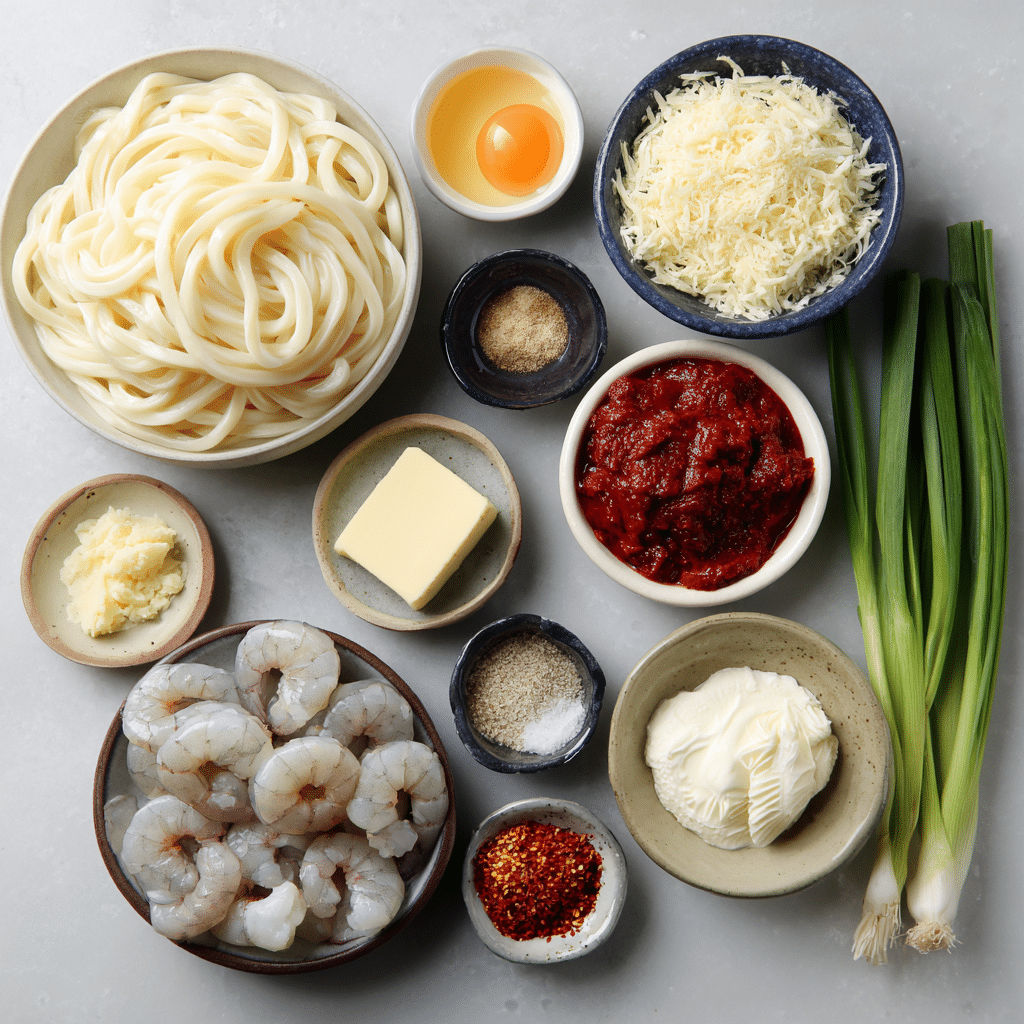
Every ingredient here has a job, and together they build a bowl that tastes layered, cozy, spicy, and just rich enough.
- Frozen or vacuum-packed udon noodles: 14 ounces, these are the chewy backbone of the dish and they hold the creamy sauce beautifully.
- Large shrimp, peeled and deveined: 1 pound, they add sweetness, tenderness, and that golden seared finish on top.
- Kosher salt: 1 teaspoon, this seasons the shrimp and helps wake up all the other flavors.
- Black pepper: 1/2 teaspoon, it brings a gentle bite that keeps the creamy sauce from feeling flat.
- Smoked paprika: 1 teaspoon, this gives the shrimp a warm, savory depth and a little extra color.
- Unsalted butter: 2 tablespoons, divided, it adds richness and helps both the shrimp and the sauce taste fuller.
- Garlic, minced: 4 cloves, this brings a fragrant savory note that ties the shrimp and sauce together.
- Gochujang: 2 tablespoons, this is the bold flavor builder, spicy, slightly sweet, and deeply savory.
- Large egg yolks: 3, they create that classic carbonara-style silkiness.
- Finely grated Parmesan cheese: 3/4 cup, divided, this melts into the sauce and adds salty nuttiness.
- Heavy cream: 1/2 cup, it softens the heat and gives the sauce that lush texture you see in the pan.
- Reserved udon cooking water: 1/3 cup, this helps emulsify the sauce and keeps it glossy.
- Scallions, thinly sliced: 2, they add freshness and a pop of color right at the end.
- Crushed red pepper flakes: 1/2 teaspoon, for a final spark of heat and texture.
Easy Swaps for What You Have On Hand
Sometimes the pantry decides dinner for us, and this recipe is flexible enough to handle that.
Shrimp: Sliced mushrooms or pan-seared tofu.
Parmesan cheese: Pecorino Romano.
Heavy cream: Half-and-half, though the sauce will be a little lighter.
Scallions: Chives or very thinly sliced green onion tops.
Udon noodles: Thick wheat noodles or spaghetti, though the texture will change.
Smoked paprika: Sweet paprika with a tiny pinch of cayenne.
The Star Players Worth Talking About
A couple of ingredients really define the personality of this dish, so they deserve a little spotlight.
Gochujang: This fermented Korean chile paste is not just spicy. It is savory, slightly sweet, and almost jammy in the best way. It gives the sauce its color and that unmistakable deep warmth.
Udon noodles: Thick, bouncy, and ridiculously satisfying, udon turns every twirl into a proper bite. Their chewiness makes the creamy sauce feel even more luxurious.
Let’s Get Cooking
Now the fun part begins, and this is where the whole story comes together in the pan. Here are the steps you’re going to follow.
- Preheat Your Equipment: Bring a large pot of salted water to a boil for the udon. At the same time, set a large skillet over medium heat so it is ready when you need it.
- Combine Ingredients: In a medium bowl, whisk together the egg yolks, gochujang, 1/2 cup of the grated Parmesan cheese, heavy cream, and black pepper until smooth. In a second small bowl, toss the shrimp with the kosher salt, smoked paprika, and 1/2 teaspoon of the minced garlic.
- Prepare Your Cooking Vessel: Add 1 tablespoon of butter to the warm skillet. When it melts, add the shrimp in a single layer and cook for 1 to 2 minutes per side until lightly browned and just cooked through. Transfer the shrimp to a plate.
- Assemble the Dish: Cook the udon according to the package directions, usually just a few minutes, then reserve 1/3 cup of the cooking water and drain. Add the remaining 1 tablespoon of butter to the skillet, then add the rest of the garlic and cook for about 30 seconds until fragrant. Add the drained udon and toss gently to coat.
- Cook to Perfection: Turn the heat to low, or briefly remove the skillet from the heat. Pour in the sauce mixture and the reserved udon cooking water, then toss continuously until the noodles are coated in a silky, glossy sauce. Return the shrimp to the pan and fold everything together gently.
- Finishing Touches: Sprinkle over the remaining 1/4 cup Parmesan cheese, then scatter the scallions and crushed red pepper flakes on top. Give the noodles one last gentle toss if you want the garnish worked through.
- Serve and Enjoy: Spoon the noodles into shallow bowls or serve straight from the pan while everything is hot, glossy, and irresistible.
What Makes the Texture and Flavor So Good
This bowl is all about contrast. The udon stays thick and springy, which gives you that satisfying chew, while the sauce lands soft and velvety around it. The shrimp bring a slight snap and a caramelized edge, which keeps the dish from feeling one-note.
Flavor-wise, it starts creamy and savory, then the parmesan brings saltiness, the garlic rounds it out, and the gochujang arrives with this slow-building warmth that lingers in the best possible way. The scallions at the end cut through the richness with a fresh little bite. This one’s a total game-changer.
Smart Little Tips for the Best Results
A few easy habits can make the whole process feel even smoother.
- Tip: Grate your parmesan fresh if possible. It melts more cleanly and gives the sauce a smoother finish.
- Tip: Keep the heat low once the sauce goes in. Gentle warmth is what gives you gloss instead of curds.
- Tip: Taste before adding extra salt. Parmesan and gochujang already bring plenty of savory punch.
- Tip: Slice the scallions just before serving so they stay crisp and bright.
Common Slip-Ups and How to Dodge Them
Even easy recipes have a few places where things can go sideways, so here is what to watch for.
- Mistake: Overcooking the shrimp. Fix: Pull them from the pan as soon as they are opaque and lightly golden.
- Mistake: Adding the egg mixture over high heat. Fix: Lower the heat first, or take the pan off the burner for a moment.
- Mistake: Skipping the noodle water. Fix: Always save a little, because it helps the sauce turn smooth and clingy.
- Mistake: Letting the sauce sit too long before serving. Fix: Serve right away while it is loose, glossy, and at its best.
A Quick Look at the Nutrition
This dish feels indulgent, but it still fits nicely into a balanced dinner when portioned well.
Servings: 4
Calories per serving: 560
Note: These are approximate values.
Time You’ll Want to Set Aside
The best part here is how quickly this comes together once everything is ready.
Prep Time: 15 minutes
Cook Time: 20 minutes
Total Time: 35 minutes
Make-Ahead and Storage Tips That Actually Help
If you want dinner to move faster, you can clean and season the shrimp ahead of time, grate the cheese, slice the scallions, and whisk the sauce mixture a few hours before cooking. Keep everything chilled and covered, then just bring the sauce mixture close to room temperature before using.
Leftovers keep well in an airtight container in the refrigerator for up to 2 days. For reheating, use a skillet over low heat with a small splash of water to loosen the sauce. Freezing is not ideal here because the creamy sauce can separate, but if you do freeze it, thaw overnight in the fridge and reheat gently.
The Best Ways to Serve It
This bowl is rich and satisfying on its own, so I like to keep the sides simple. A crisp cucumber salad works beautifully, and so does lightly dressed greens with a sharp vinaigrette. If you want to round it out even more, roasted broccoli or blistered green beans bring a nice contrast.
For drinks, sparkling water with citrus is perfect. It keeps the whole meal feeling fresh and lively.
Leftovers That Deserve a Second Round
The next day, these noodles can become something new with barely any effort. Warm them in a skillet and top with a fried egg for a quick lunch. Tuck the shrimp and noodles into a bowl with wilted spinach for an easy grain-free dinner moment. You can even stir in a little extra cream or water and turn it into a looser, supper-style noodle bowl.
Honestly, leftovers might be the secret bonus here.
A Few More Helpful Notes Before You Make It
Use a wide skillet if you can, because it gives the noodles room to move and helps the sauce coat everything evenly. Have all your ingredients ready before you start cooking, since this recipe comes together quickly once the shrimp hit the pan.
And do not be afraid to adjust the heat level. If you love spice, add a touch more gochujang or a pinch more red pepper flakes. If you want it gentler, hold back slightly and let the creamy parmesan base lead the way.
Simple Ways to Make It Look Extra Special
Serve it in shallow bowls so the shrimp stay visible on top and the sauce has room to pool around the noodles. Finish with extra scallions and a final dusting of parmesan for contrast. A few red pepper flakes scattered over the surface make the orange sauce look even more vibrant.
This is one of those meals that already looks impressive without much effort, and that is always a win.
Fun Variations to Play With
- Mushroom Version: Replace the shrimp with sliced cremini or shiitake mushrooms for an earthy, deeply savory twist.
- Extra Garlicky Bowl: Add one extra clove of garlic and finish with garlic-infused butter for a stronger savory edge.
- Lemon Brightened Style: Add a little lemon zest at the end for a fresher finish that cuts through the richness.
- Spinach Boost: Toss in a couple of handfuls of baby spinach just before serving so it wilts into the sauce.
- Hotter Take: Increase the gochujang to 2 1/2 tablespoons and finish with extra crushed red pepper flakes.
FAQ’s
1. Can I use frozen shrimp?
Yes, absolutely. Just thaw them fully and pat them dry well before seasoning so they sear instead of steam.
2. Can I make this less spicy?
Yes. Reduce the gochujang slightly and skip the extra red pepper flakes at the end.
3. Can I use parmesan from a shaker bottle?
Freshly grated is much better here. It melts more smoothly and gives the sauce a cleaner texture.
4. What if I cannot find udon?
You can use thick spaghetti or another chewy noodle, though the texture will not be quite the same.
5. Does this taste fishy because of the shrimp?
Not at all. The shrimp taste sweet and savory, especially once they are seared in butter and paprika.
6. Can I make it without cream?
You can, but the sauce will be a bit less plush. Add a little more noodle water to help it loosen and coat the noodles.
7. Why did my sauce get clumpy?
That usually happens when the pan is too hot. Lower heat and constant tossing are the keys to a silky finish.
8. Can I prep the sauce ahead of time?
Yes. Whisk it a few hours ahead, cover it, and refrigerate it until you are ready to cook.
9. Is this good for a date-night dinner?
It really is. It feels special, looks gorgeous, and still comes together fast enough that you are not stuck in the kitchen all night.
10. Can I double the recipe?
Yes, just make sure you use a very large skillet or combine everything in batches so the sauce stays smooth and the noodles stay evenly coated.
Conclusion
This bowl brings together everything I crave in a comfort dinner, creamy sauce, chewy noodles, juicy shrimp, and that bold gochujang warmth that keeps every bite interesting. It feels cozy, a little dramatic, and surprisingly easy to pull off. So the next time you want something that tastes like a treat but fits into a real evening, give this one a go. I have a feeling it is about to become one of those recipes you think about long after the last noodle is gone.
Print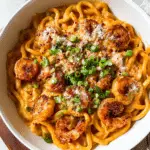
Spicy Gochujang Carbonara Udon with Shrimp
- Prep Time: 15 minutes
- Cook Time: 20 minutes
- Total Time: 35 minutes
- Yield: 4 servings 1x
- Category: Dinner
- Method: Stovetop
- Cuisine: Fusion
- Diet: Low Lactose
Description
Chewy udon noodles tossed in a creamy gochujang carbonara-style sauce with seared shrimp, parmesan, garlic, and scallions. It is rich, spicy, cozy, and perfect for a quick but impressive dinner.
Ingredients
- 14 ounces frozen or vacuum-packed udon noodles
- 1 pound large shrimp, peeled and deveined
- 1 teaspoon kosher salt
- 1/2 teaspoon black pepper
- 1 teaspoon smoked paprika
- 2 tablespoons unsalted butter, divided
- 4 cloves garlic, minced
- 2 tablespoons gochujang
- 3 large egg yolks
- 3/4 cup finely grated Parmesan cheese, divided
- 1/2 cup heavy cream
- 1/3 cup reserved udon cooking water
- 2 scallions, thinly sliced
- 1/2 teaspoon crushed red pepper flakes
Instructions
- Bring a large pot of salted water to a boil and set a large skillet over medium heat.
- In a medium bowl, whisk together the egg yolks, gochujang, 1/2 cup Parmesan cheese, heavy cream, and black pepper until smooth. In a small bowl, toss the shrimp with the kosher salt, smoked paprika, and 1/2 teaspoon of the minced garlic.
- Add 1 tablespoon butter to the skillet. When melted, add the shrimp in a single layer and cook for 1 to 2 minutes per side until lightly browned and just cooked through. Transfer the shrimp to a plate.
- Cook the udon according to the package directions. Reserve 1/3 cup of the cooking water, then drain the noodles.
- Add the remaining 1 tablespoon butter to the skillet. Add the rest of the garlic and cook for 30 seconds until fragrant. Add the drained udon and toss gently to coat.
- Turn the heat to low, or remove the skillet from the heat briefly. Pour in the sauce mixture and the reserved udon cooking water, then toss continuously until the noodles are coated in a silky sauce.
- Return the shrimp to the pan and fold gently to combine.
- Finish with the remaining 1/4 cup Parmesan cheese, scallions, and crushed red pepper flakes. Serve immediately.
Notes
- Keep the heat low when adding the sauce so the egg yolks stay silky and do not scramble.
- Freshly grated Parmesan melts more smoothly than pre-shredded cheese.
- Taste before adding extra salt because the cheese and gochujang already add a lot of savory flavor.
- Reheat leftovers gently in a skillet with a splash of water to loosen the sauce.
Nutrition
- Serving Size: 1 serving
- Calories: 560
- Sugar: 3g
- Sodium: 780mg
- Fat: 28g
- Saturated Fat: 15g
- Unsaturated Fat: 10g
- Trans Fat: 0.5g
- Carbohydrates: 43g
- Fiber: 2g
- Protein: 31g
- Cholesterol: 255mg
Keywords: spicy udon, gochujang noodles, shrimp udon, carbonara udon, creamy shrimp noodles, easy weeknight dinner