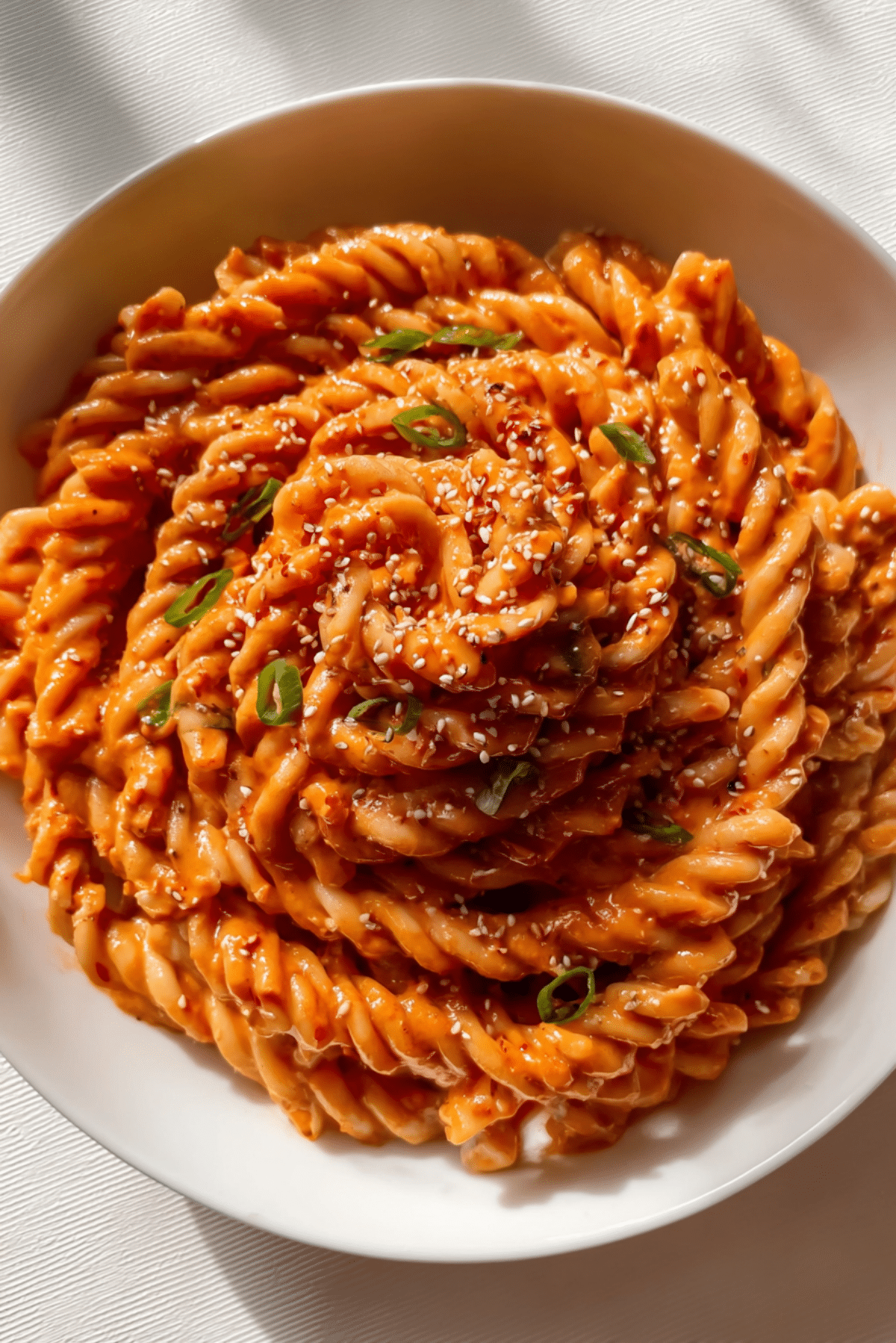
Spicy Gochujang Pasta made with Colonne Pompeii noodles
There is something magical about a bowl of pasta that carries heat, depth, and just a little attitude. This Spicy Gochujang Pasta made with Colonne Pompeii noodles is bold, glossy, and unapologetically flavorful. The noodles soak up that rich red sauce, the garlic perfumes the whole kitchen, and the vegetables soften just enough to keep a little bite. Trust me, you’re going to love this. It is comforting like Italian pasta night, but with a fiery Korean twist that wakes everything up.
A Fiery Twist That Makes Pasta Night Exciting Again
You know those dinners that feel familiar but still surprise you? This is one of them. The sauce clings to every curve of the Colonne Pompeii noodles, coating them in a silky, spicy glaze. The sweetness from the peppers balances the heat, and the sesame seeds add that subtle nutty finish. Let me tell you, it’s worth every bite. It is cozy, but it has personality.
Where Korean Heat Meets Italian Comfort
Gochujang has been a staple in Korean cooking for centuries. This fermented chili paste brings heat, depth, and a gentle sweetness that is hard to replicate. Traditionally used in stews, marinades, and rice dishes, it has slowly found its way into modern fusion kitchens around the world.
Pairing it with Italian pasta might sound unexpected, but it works beautifully. The fermented richness of gochujang blends seamlessly with olive oil and garlic, creating a sauce that feels both comforting and adventurous at the same time.
Why This Dish Always Delivers
Before we step into the kitchen, let me tell you why this one’s a total game-changer.
Versatile: You can serve it as a main dish or as a bold side. Add protein or keep it plant based, it adapts easily.
Budget-Friendly: The ingredients are simple pantry staples with one hero ingredient that lasts for multiple meals.
Quick and Easy: From boiling pasta to finishing touches, it comes together in about half an hour.
Customizable: Adjust the heat level, swap vegetables, or add extra greens without losing its charm.
Crowd-Pleasing: Spicy, savory, slightly sweet, it hits all the right notes for most palates.
Make-Ahead Friendly: The sauce can be prepared ahead and tossed with freshly cooked noodles later.
Great for Leftovers: The flavors deepen overnight, making tomorrow’s bowl even better.
Chef Secrets for the Best Flavor
Now let’s talk like real cooks.
- Do not overcook the pasta. Keep it al dente so it holds the sauce perfectly.
- Sauté the garlic gently. You want it fragrant, not browned or bitter.
- Save a little pasta water. It helps loosen the sauce and makes it silky.
- Add the spinach at the end so it wilts but keeps its vibrant green color.
Kitchen Tools That Make It Easier
Before we start cooking, gather a few basics.
Large Pot: For boiling the noodles evenly.
Deep Skillet or Sauté Pan: Wide enough to toss everything together comfortably.
Wooden Spoon or Tongs: For mixing and coating the pasta thoroughly.
Colander: To drain the pasta while saving a bit of that cooking water.
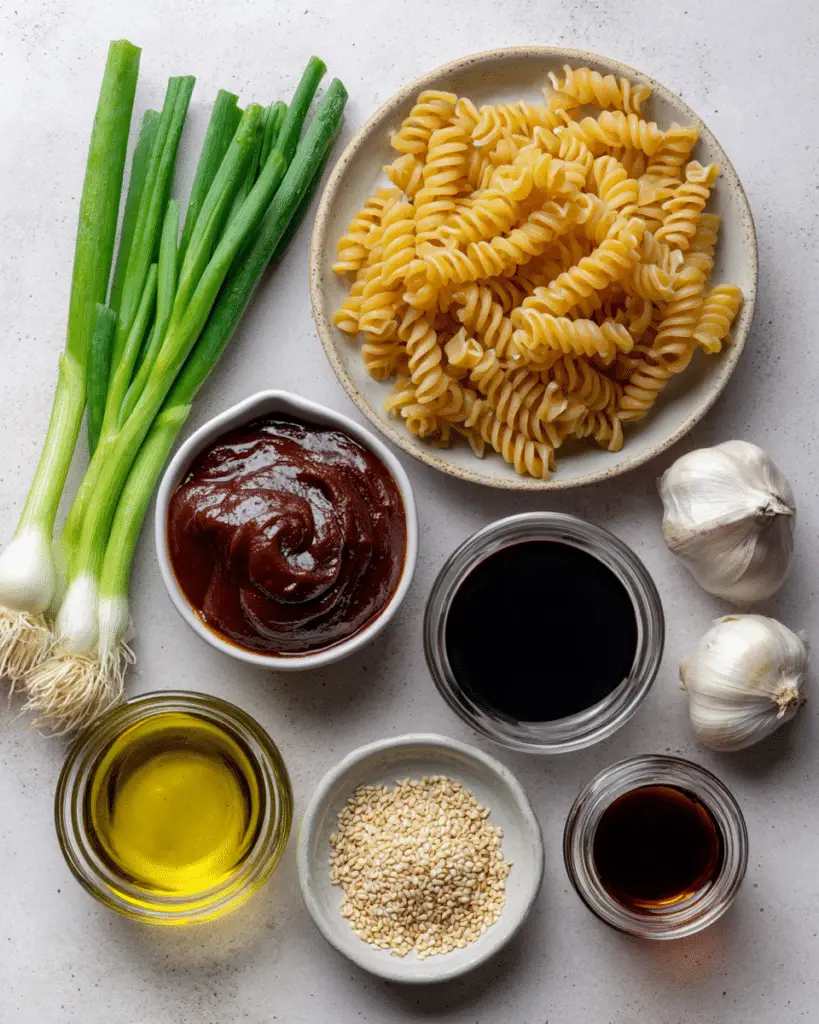
Ingredients That Bring It All Together
Every ingredient here plays a role, and together they create something special.
- Colonne Pompeii noodles: 12 ounces. The ridges help capture every bit of spicy sauce.
- Gochujang: 3 tablespoons. The heart of the sauce, bringing heat and umami.
- Olive oil: 2 tablespoons. Helps carry flavor and create a silky texture.
- Garlic: 3 cloves, minced. Adds depth and aroma.
- Red bell pepper: 1 medium, thinly sliced. Brings sweetness and color.
- Baby spinach: 2 cups, fresh. Adds freshness and a soft texture.
- Soy sauce: 1 tablespoon. Enhances the savory profile.
- Honey: 1 tablespoon. Balances the spice with gentle sweetness.
- Sesame oil: 1 teaspoon. Adds nutty fragrance.
- Sesame seeds: 1 teaspoon. For subtle crunch.
- Green onions: 2 tablespoons, thinly sliced. Bright finishing touch.
- Salt: 1 teaspoon, or to taste. For seasoning the pasta water.
- Black pepper: 1/2 teaspoon. Adds mild heat.
Easy Swaps If You Need Them
Sometimes you work with what you have, and that is perfectly fine.
Colonne Pompeii noodles: Any ridged pasta like penne or rigatoni.
Honey: Maple syrup or brown sugar.
Baby spinach: Kale or bok choy.
Red bell pepper: Thinly sliced carrots or zucchini.
Spotlight on Key Ingredients
Gochujang: This fermented chili paste brings heat, sweetness, and complexity. It is thick, rich, and slightly sticky, which makes the sauce cling beautifully to pasta.
Colonne Pompeii noodles: Their structure captures sauce in every ridge, ensuring each bite is full of flavor.
Let’s Get Cooking
Alright, and now let’s dive into the cooking process.
- Preheat Your Equipment: Bring a large pot of salted water to a boil over medium high heat.
- Combine Ingredients: In a small bowl, mix gochujang, soy sauce, honey, and sesame oil until smooth.
- Prepare Your Cooking Vessel: Heat olive oil in a deep skillet over medium heat. Add minced garlic and cook for about 30 seconds until fragrant. Stir in the sliced red bell pepper and cook for 3 to 4 minutes until slightly softened.
- Assemble the Dish: Cook the Colonne Pompeii noodles according to package instructions until al dente. Reserve 1/4 cup of pasta water, then drain. Add the noodles to the skillet along with the sauce mixture and a splash of reserved pasta water.
- Cook to Perfection: Toss everything together for 2 to 3 minutes so the sauce thickens and coats the pasta evenly. Stir in baby spinach and cook until just wilted.
- Finishing Touches: Sprinkle sesame seeds and sliced green onions on top. Season with black pepper and adjust salt if needed.
- Serve and Enjoy: Serve immediately while warm and glossy. Take a deep breath and enjoy that spicy aroma.
The Texture and Flavor Journey
The first bite hits you with warmth from the chili paste, followed by a gentle sweetness that keeps it balanced. The noodles are tender yet firm, the peppers offer a slight crunch, and the spinach melts softly into the sauce. Sesame oil lingers at the end, giving it a rounded, nutty finish.
Helpful Tips for Even Better Results
- Add a splash of pasta water slowly to control the sauce thickness.
- Taste the sauce before adding it to the pasta and adjust sweetness or salt.
- Toast the sesame seeds lightly for extra depth.
Common Mistakes to Avoid
- Overcooking the noodles, which makes the dish mushy.
- Burning the garlic, which creates bitterness.
- Adding too much gochujang without balancing sweetness.
Nutrition Breakdown Per Serving
Servings: 4
Calories per serving: 420
Note These values are approximate and may vary depending on specific brands used.
Timing at a Glance
Prep Time: 10 minutes
Cook Time: 20 minutes
Total Time: 30 minutes
Make-Ahead and Storage Tips
You can prepare the sauce up to two days in advance and store it in the refrigerator. Cooked pasta can be stored in an airtight container for up to three days. Reheat gently in a skillet with a splash of water to loosen the sauce. Freezing is not ideal as the texture of the noodles may change.
How to Serve It Like a Pro
Serve it in wide bowls with an extra sprinkle of green onions. Pair it with a crisp cucumber salad or simple roasted vegetables for contrast. A squeeze of fresh lime on top can brighten everything up.
Creative Leftover Ideas
Turn leftovers into a stir fry by adding extra vegetables. Use it as a filling for a savory wrap. You can even top it with a fried egg for a next day brunch twist.
Extra Tips for Flavor and Ease
If you love heat, add a pinch of chili flakes. For extra protein, toss in sautéed tofu. Always taste and adjust seasoning before serving.
Make It Look Irresistible
Twirl the noodles neatly with tongs before plating. Let some red sauce peek through for visual contrast. A light sprinkle of sesame seeds on top adds texture and makes it look restaurant worthy.
Fun Variations to Explore
- Add sautéed mushrooms for earthiness.
- Stir in a spoonful of cream for a slightly milder sauce.
- Add steamed broccoli for extra crunch.
- Mix in cooked shrimp for a seafood twist.
FAQ’s
Q1: Can I make it less spicy?
Yes, reduce the gochujang to 2 tablespoons and add a bit more honey.
Q2: Can I make it gluten free?
Use gluten free pasta and tamari instead of soy sauce.
Q3: Can I add protein?
Absolutely, tofu or grilled chicken work well.
Q4: How do I store leftovers?
Keep them in an airtight container in the refrigerator for up to three days.
Q5: Can I freeze it?
It is best fresh, but you can freeze it for up to one month.
Q6: What vegetables work best?
Bell peppers, spinach, zucchini, and mushrooms are all great options.
Q7: Can I double the sauce?
Yes, especially if you prefer extra saucy pasta.
Q8: Is it very spicy?
It has a moderate kick, but you can adjust easily.
Q9: Can I use another sweetener?
Maple syrup or brown sugar work fine.
Q10: What makes it special?
The combination of fermented heat and classic pasta comfort makes it unforgettable.
Conclusion
This Spicy Gochujang Pasta made with Colonne Pompeii noodles brings bold flavor, comforting texture, and just the right amount of heat to your table. It is simple, satisfying, and full of personality. This one’s a total game-changer, and once you try it, you might find yourself craving that glossy red sauce again and again.
Print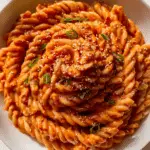
Spicy Gochujang Pasta made with Colonne Pompeii noodles
- Prep Time: 10 minutes
- Cook Time: 20 minutes
- Total Time: 30 minutes
- Yield: 4 servings 1x
- Category: Main Course
- Method: Stovetop
- Cuisine: Korean-Italian Fusion
- Diet: Vegetarian
Description
A bold and comforting pasta dish tossed in a glossy gochujang sauce with garlic, sweet red bell peppers, and fresh spinach. This fusion recipe brings Korean heat to Italian pasta night in the most delicious way.
Ingredients
- 12 ounces Colonne Pompeii noodles
- 3 tablespoons gochujang
- 2 tablespoons olive oil
- 3 cloves garlic, minced
- 1 medium red bell pepper, thinly sliced
- 2 cups fresh baby spinach
- 1 tablespoon soy sauce
- 1 tablespoon honey
- 1 teaspoon sesame oil
- 1 teaspoon sesame seeds
- 2 tablespoons green onions, thinly sliced
- 1 teaspoon salt
- 1/2 teaspoon black pepper
Instructions
- Bring a large pot of salted water to a boil over medium high heat.
- In a small bowl, mix gochujang, soy sauce, honey, and sesame oil until smooth.
- Heat olive oil in a deep skillet over medium heat. Add minced garlic and cook for about 30 seconds until fragrant. Stir in the sliced red bell pepper and cook for 3 to 4 minutes until slightly softened.
- Cook the Colonne Pompeii noodles according to package instructions until al dente. Reserve 1/4 cup of pasta water, then drain.
- Add the drained noodles to the skillet along with the sauce mixture and a splash of reserved pasta water. Toss for 2 to 3 minutes until the sauce thickens and coats the pasta evenly.
- Stir in baby spinach and cook until just wilted.
- Sprinkle sesame seeds and sliced green onions on top. Season with black pepper, adjust salt if needed, and serve immediately.
Notes
- Adjust the spice level by reducing gochujang to 2 tablespoons for a milder version.
- Reserve pasta water and add gradually to control sauce thickness.
- Toast sesame seeds lightly for deeper flavor.
- Store leftovers in an airtight container in the refrigerator for up to 3 days.
Nutrition
- Serving Size: 1 serving
- Calories: 420
- Sugar: 8g
- Sodium: 780mg
- Fat: 14g
- Saturated Fat: 2g
- Unsaturated Fat: 11g
- Trans Fat: 0g
- Carbohydrates: 63g
- Fiber: 4g
- Protein: 11g
- Cholesterol: 0mg
Keywords: spicy gochujang pasta, colonne pompeii noodles, korean pasta fusion, gochujang noodle recipe, spicy vegetarian pasta